



What Is a Backlink Exchange, Exactly?
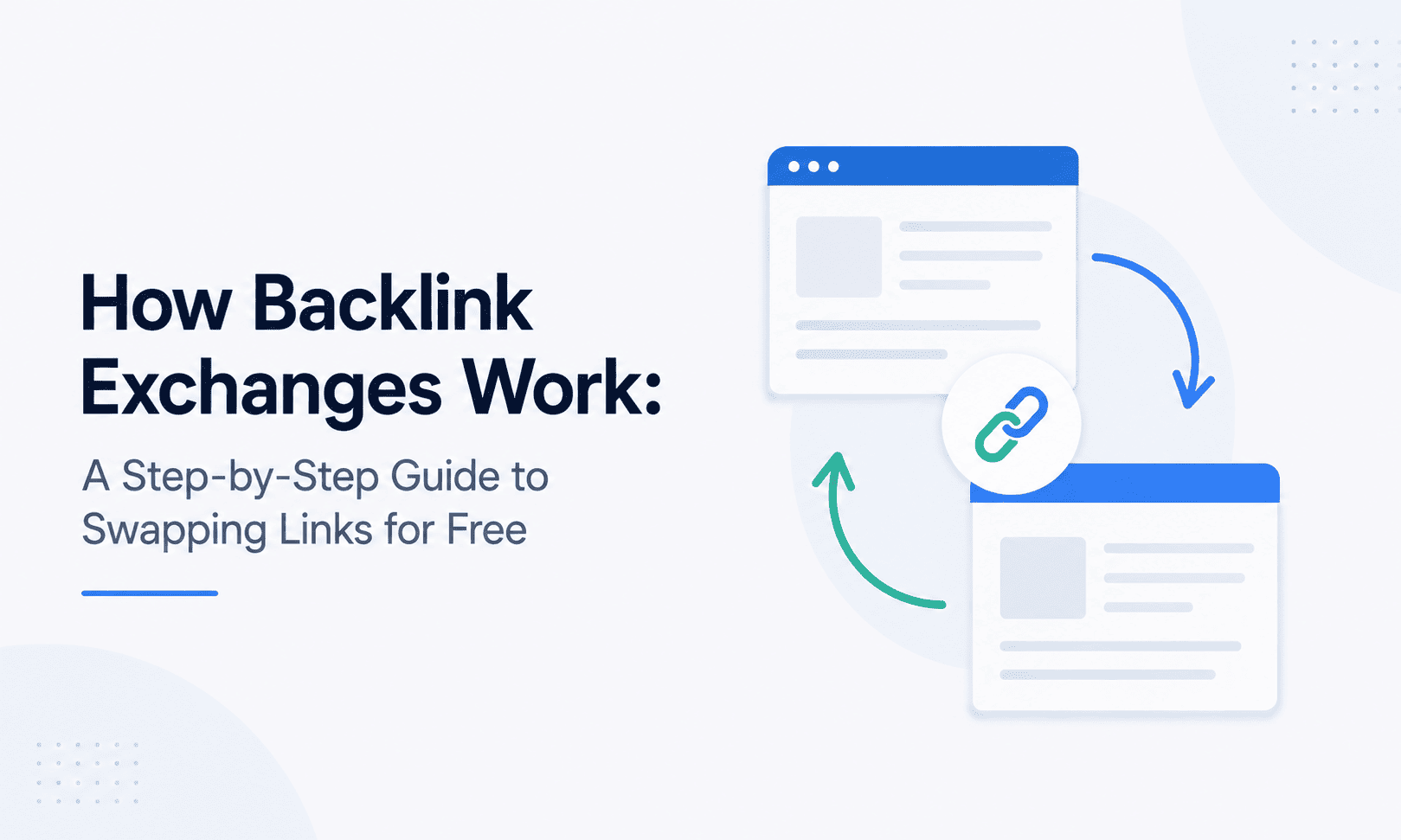
A backlink exchange (also called reciprocal linking) is an agreement between two website owners to link to each other's content. Unlike paid link placements, no money changes hands — instead, both sites benefit by adding a relevant, valuable link for their respective audiences. This is one of the oldest link-building methods on the web, predating most modern SEO tactics entirely. (For the broader context on why this remains effective today, see our pillar guide: "Free Backlinks: The Complete Guide to Building Links Without Spending Money.")Why Relevance Is the Core of a Safe Exchange
The difference between a safe, effective exchange and a risky one almost always comes down to relevance. Search engines are far more concerned with why a link exists than the simple fact that it's reciprocal. A gardening blog linking to a landscaping business, for example, makes contextual sense to both users and search engines. A gardening blog linking to an unrelated software company, purely because both site owners agreed to swap links, looks unnatural — and patterns of this kind of irrelevant reciprocal linking are exactly what search engine spam guidelines target. (For a full breakdown of safety considerations, see: "Is Free Backlink Exchange Safe for SEO in 2026?")The Backlink Exchange Process, Step by Step
Step 1: Find a relevant partner site. This is easiest through a structured exchange platform that matches members by niche, rather than manually searching for and cold-emailing site owners one by one.
Step 2: Evaluate the partner's site quality. Before agreeing to anything, check the site's content quality, relevance to your niche, and general trustworthiness — a platform with vetting built in makes this step much faster.
Step 3: Agree on placement. Decide specifically where each link will go — ideally within an existing, relevant piece of content (a blog post, resource page, or related article), not a random or unrelated page.
Step 4: Add the link to your site. Place the partner's link naturally within the agreed content, using descriptive, varied anchor text rather than generic or repetitive phrasing.
Step 5: Confirm your partner has done the same. Check that your link has actually been added as agreed — this step gets skipped more often than it should, leaving one-sided "exchanges" that provide no real benefit.
Step 6: Verify the link type and status. Use a backlink checker tool to confirm the link is live, indexed, and dofollow if that was the agreement.
Step 7: Track the exchange over time. Links can be removed or changed after the fact — periodically checking your existing exchanges ensures your link profile stays accurate.
Common Mistakes That Make Exchanges Risky
- Exchanging in bulk with irrelevant sites just to inflate link count
- Using identical anchor text across every exchange, which looks manipulative
- Skipping verification, resulting in one-sided exchanges that provide no value
- Placing links on thin or low-quality pages rather than genuinely relevant content
- Working with unvetted partners whose sites may themselves violate spam guidelines