

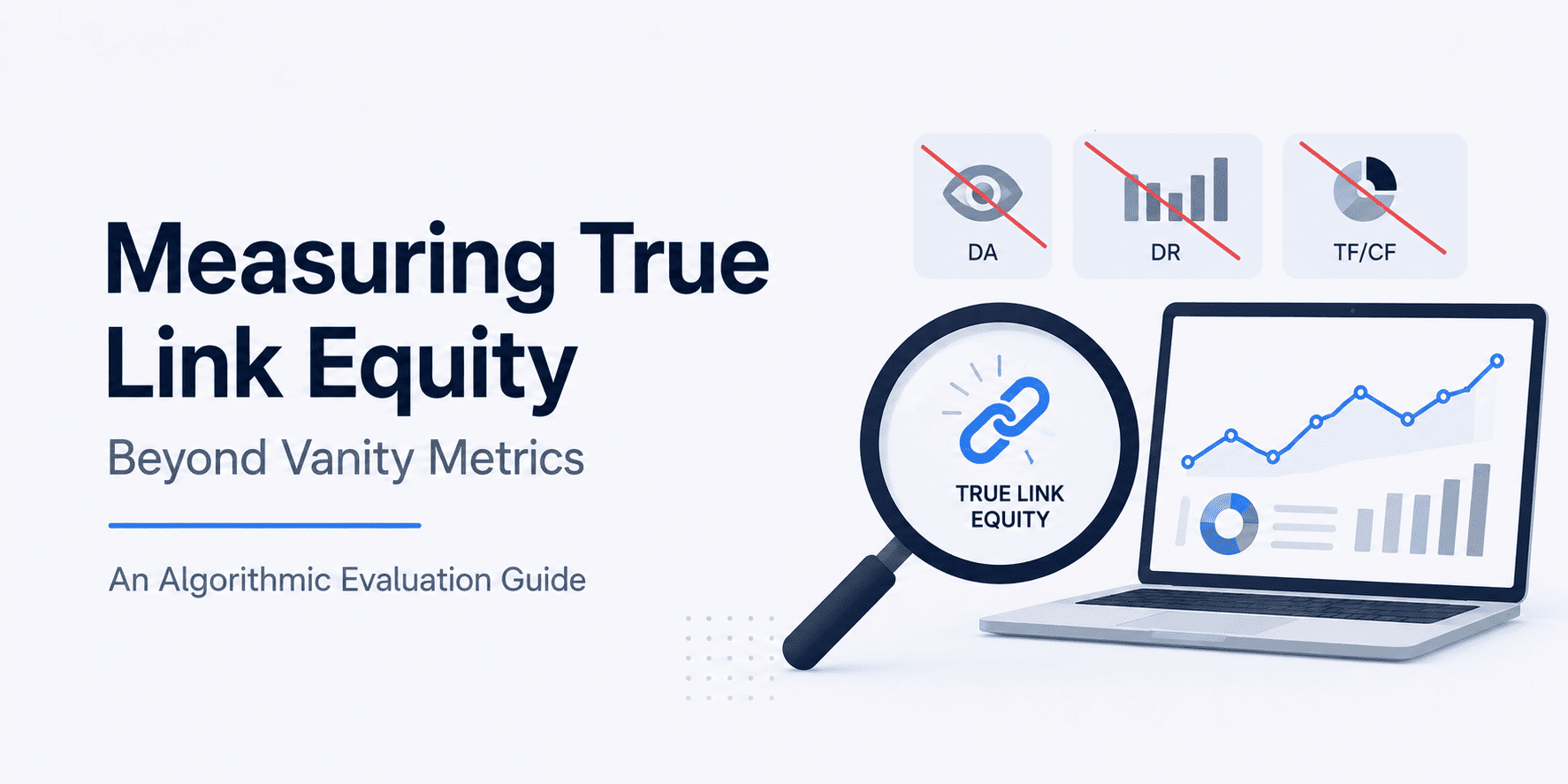


In off-page search engine optimization, confusing third-party vanity metrics with true link equity is one of the costliest mistakes an SEO team can make.
While third-party metrics like Domain Rating (DR) or Domain Authority (DA) serve as convenient initial filters, they do not reflect how search engine algorithms measure and pass link authority.
This technical guide breaks down the core algorithmic mechanics of true link equity, showing you how to evaluate link value using structural PageRank principles, traffic signals, and semantic relevance.
The 4 Pillars of Algorithmic Link Equity
True link equity is the actual mathematical value transferred from a referring URL to a destination page. It is determined by four primary pillars:
| Pillar | Core Evaluation Signal | High Equity Status |
|---|---|---|
| Search Trust | Real Organic Search Traffic | > 1,000 visits/mo |
| Structural Flow | Reasonable Surfer Model Placement | In-Body Editorial |
| Equity Density | Low Outbound External Link Count | < 10 Outbound Links |
| Topical Relevancy | Semantic Context & Co-Occurrence | Niche-Aligned Text |
1. Organic Search Trust & Indexation
A referring page must be actively indexed and trusted by search engines. If a domain receives thousands of organic search visits, search crawlers actively crawl and credit its link node.
2. Structural Placement (The Reasonable Surfer Model)
According to Google's Reasonable Surfer patent, link equity is distributed based on the likelihood of a user clicking the link:
High Equity: Prominent, in-content contextual body links within primary article copy.
Low Equity: Footers, author bio boxes, sidebar widgets, or privacy policy pages.
3. Outbound Link Density
A web page possesses a finite pool of PageRank equity to distribute. Linking out to excessive external commercial domains dilutes the equity transferred to each individual target.
4. Topical Distance & Semantic Co-Occurrence
Search engines evaluate the words surrounding a hyperlink (co-occurrence). A link embedded inside topically relevant text passes far stronger ranking signals than an un-themed mention on an unrelated site.
Good to know
Backlink value is influenced by several signals at once, including page quality, relevance, placement, and the authority flowing through the linking page. No single metric can precisely measure the amount of ranking value a link transfers.
- Evaluate the specific linking page rather than relying only on domain-level authority.
- Use organic visibility as a supporting quality signal, not proof that every link from the site is valuable.
- Favor contextual links that are naturally relevant to the surrounding content.
- Treat prominent editorial placement as a positive signal without assuming a fixed amount of PageRank transfer.
- Review outbound-link patterns for excessive or clearly commercial linking behavior.
- Avoid rigid thresholds such as 1,000 monthly visits or fewer than 10 outbound links.
- Combine relevance, indexing, page quality, placement, and backlink strength when assessing overall link value.
Best strategy: page-level authority + contextual relevance + natural placement + multiple supporting quality signals.
Comparing Vanity Metrics vs. Algorithmic Reality
To build an authoritative link profile, understand where third-party metrics fall short compared to real engine evaluation signals:
| Third-Party Vanity Metrics (DR/DA) | Algorithmic Link Equity Signals |
|---|---|
| Easy to artificially inflate | Proven by real organic traffic |
| Domain-wide average calculation | Page-specific PageRank node flow |
| Ignores link page placement | Heavily discounts footer links |
| Counts unindexed backlinks | Requires active search indexation |
Good to know
DR, DA, and similar authority scores can help compare domains, but they are third-party estimates—not direct measures of Google’s PageRank or ranking trust. Link value is better evaluated at the page level using several supporting signals.
- Use DR and DA for benchmarking, not as proof of backlink value.
- Review the specific linking page rather than relying only on a domain-wide score.
- Treat organic traffic as evidence of search visibility, not proof of “search trust.”
- Check whether the linking page is indexable and receiving meaningful visibility where possible.
- Favor links that are contextually relevant and naturally integrated into useful content.
- Examine placement and outbound-link patterns without assuming fixed PageRank discounts.
- Combine authority metrics, relevance, indexing, traffic, and editorial quality before judging a link.
Best strategy: third-party metrics for screening + page-level analysis + contextual relevance + multiple corroborating signals.
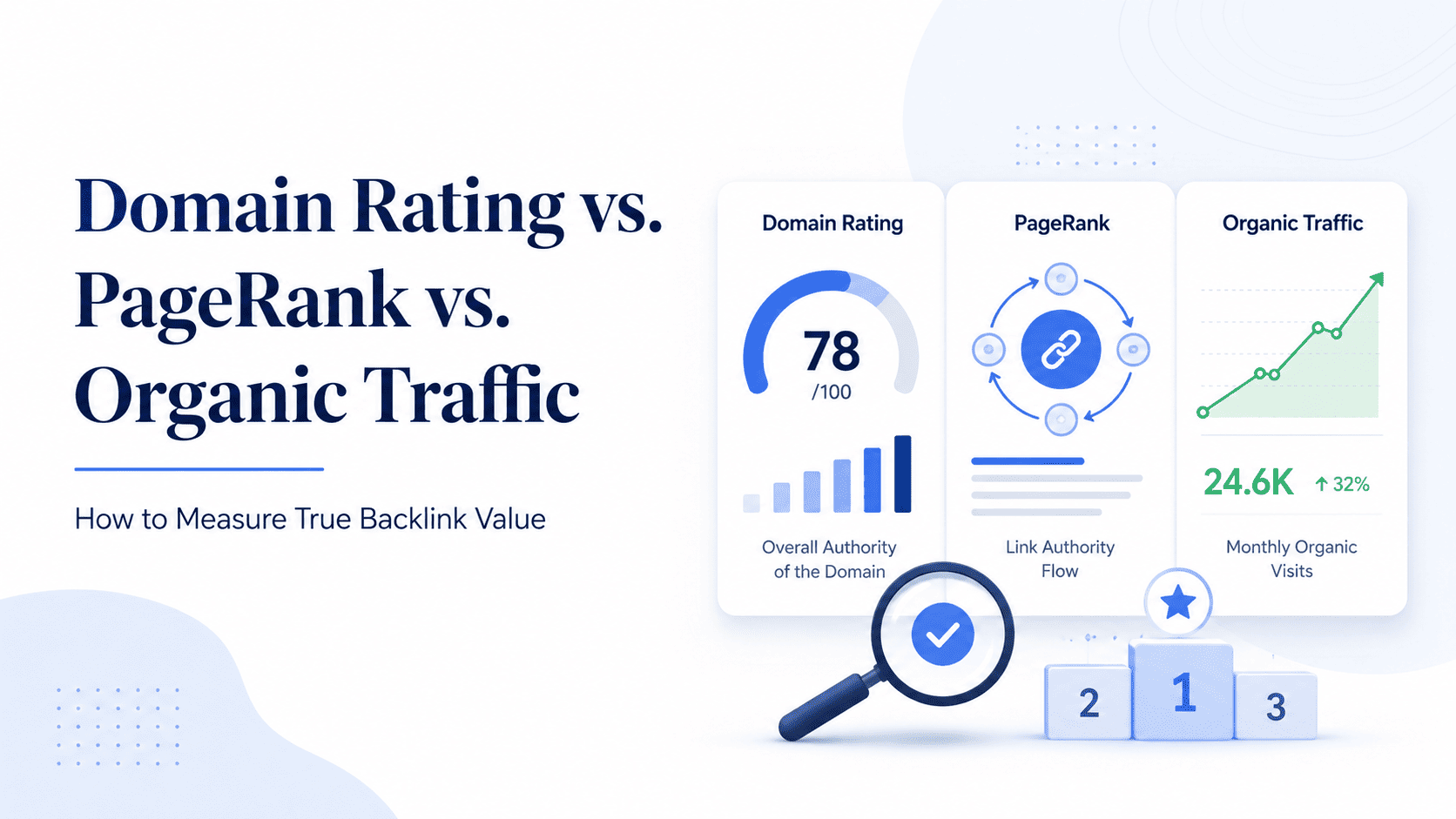
For a deeper analysis comparing tool metrics against search engine traffic, read:
Practical Checklist: Auditing Backlinks for True Equity
Before acquiring a link or approving a partner trade, run the candidate URL through this evaluation checklist:
Indexation Verification: Perform a
site:URLquery to confirm the exact page is indexed.Traffic Audit: Confirm the host domain generates at least 1,000+ monthly search visits via Ahrefs or Semrush.
Outbound Count: Verify the page links out to fewer than 10 external commercial sites.
Anchor Safety: Ensure your anchor text uses balanced distributions according to our Anchor Text Ratio Guide.
Competitor Intersections: Check if the domain links to multiple vertical competitors using our Competitor Backlink Gap Analysis Playbook.
Good to know
A backlink checklist is useful for consistency, but each signal should be treated as evidence—not as a universal pass/fail rule. The strongest decisions come from combining indexation, relevance, traffic, placement, and competitive context.
Verify whether the linking page is discoverable and indexable, but do not rely on a
site:query as a definitive indexation test.Use Ahrefs or Semrush traffic estimates as directional signals rather than fixed minimum requirements.
Review outbound links for excessive commercial linking, not against an arbitrary numeric cap.
Keep anchor text natural and contextually appropriate instead of forcing predetermined ratios.
Check whether the domain links to relevant competitors, but treat overlap as an opportunity signal rather than proof of quality.
Evaluate the specific page, not just the domain-level metrics.
Record why a link passed or failed review so decisions remain consistent across campaigns.
Best strategy: multi-signal review + page-level analysis + natural anchors + contextual competitor benchmarking.
Maximizing Equity Transfer via Non-Reciprocal Exchanges
To acquire high-equity links without triggering reciprocal link penalties, leverage structured 3-way link topologes:
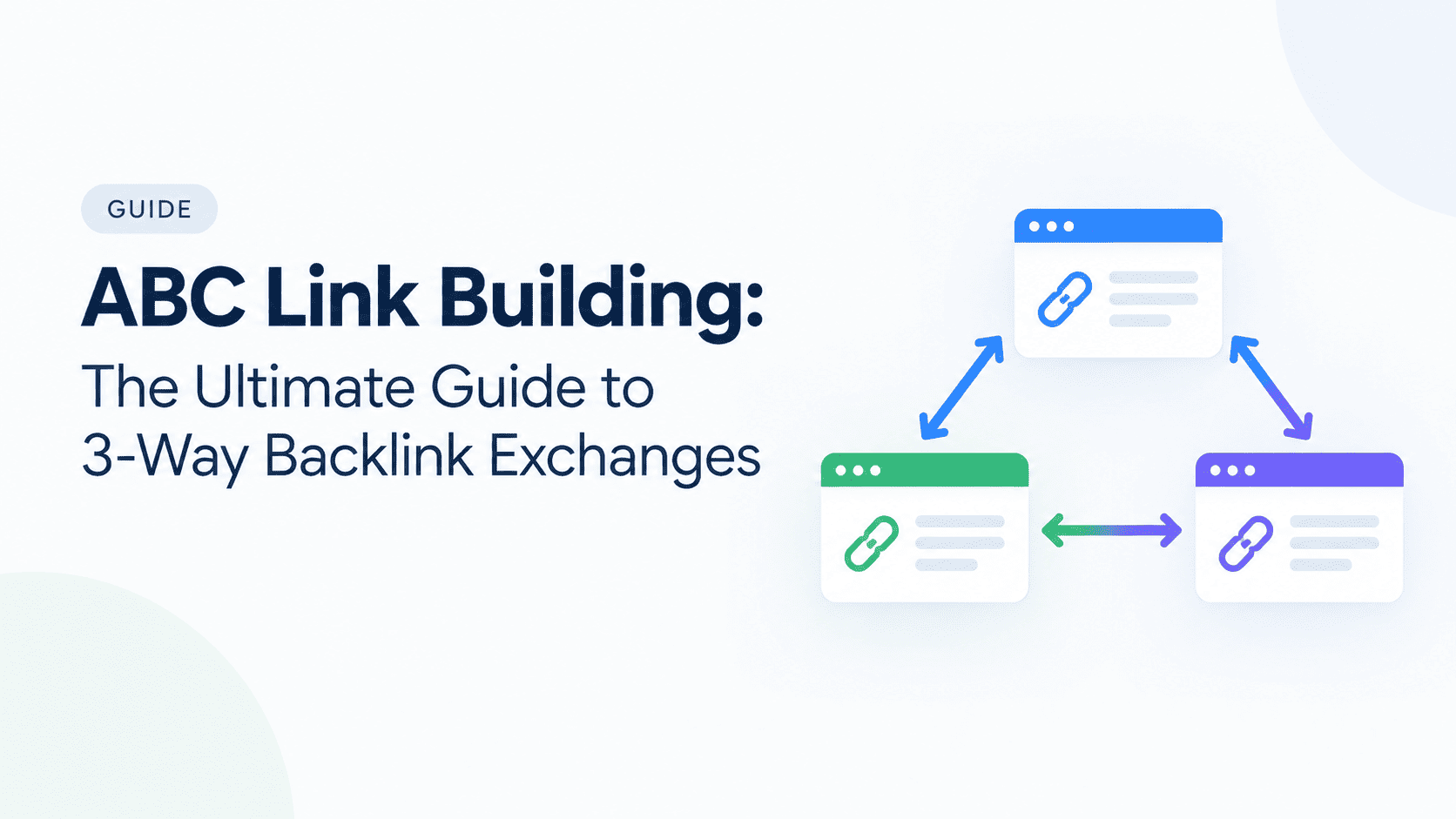
Non-Reciprocal 3-Way Exchanges: Pass pure, undiluted PageRank by trading links non-reciprocally across verified network sites (A → B → C → A). Read our core pillar:
B2B SaaS Playbooks: Build contextual link equity using product-led assets:

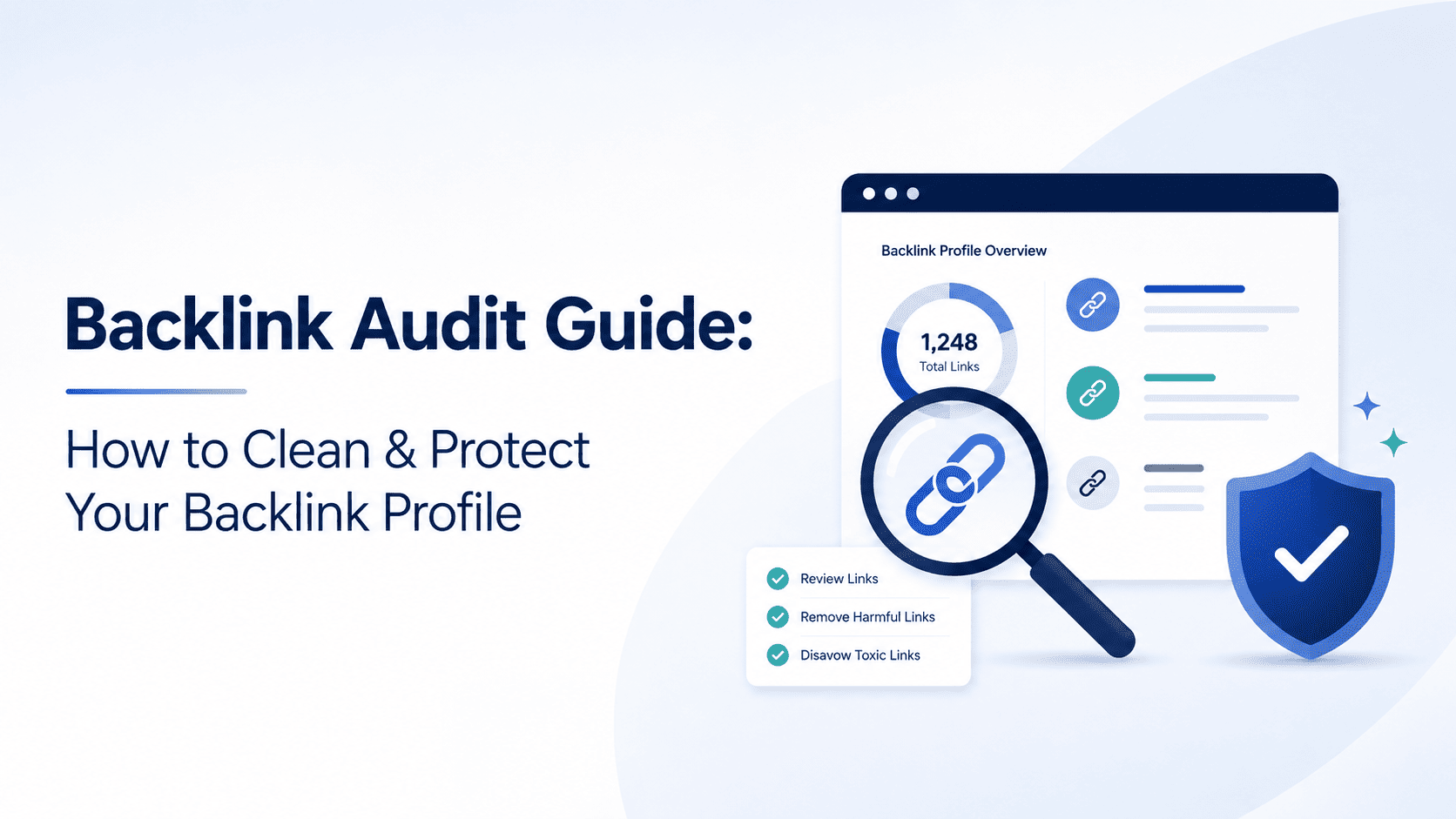
Quarterly Audit Routines: Clean out non-performing or toxic links using our:
Platforms like BacklinkExchange.org ensure maximum equity transfer by matching your site exclusively with traffic-verified, index-confirmed domains for safe 3-way link trades.