



When building or auditing backlinks, evaluating link quality is the difference between rapid keyword ranking growth and wasted SEO effort.
However, many site owners and marketers fall into the trap of relying exclusively on third-party vanity scores—such as Ahrefs Domain Rating (DR) or Moz Domain Authority (DA)—without looking at whether search engines actually trust the referring domain.
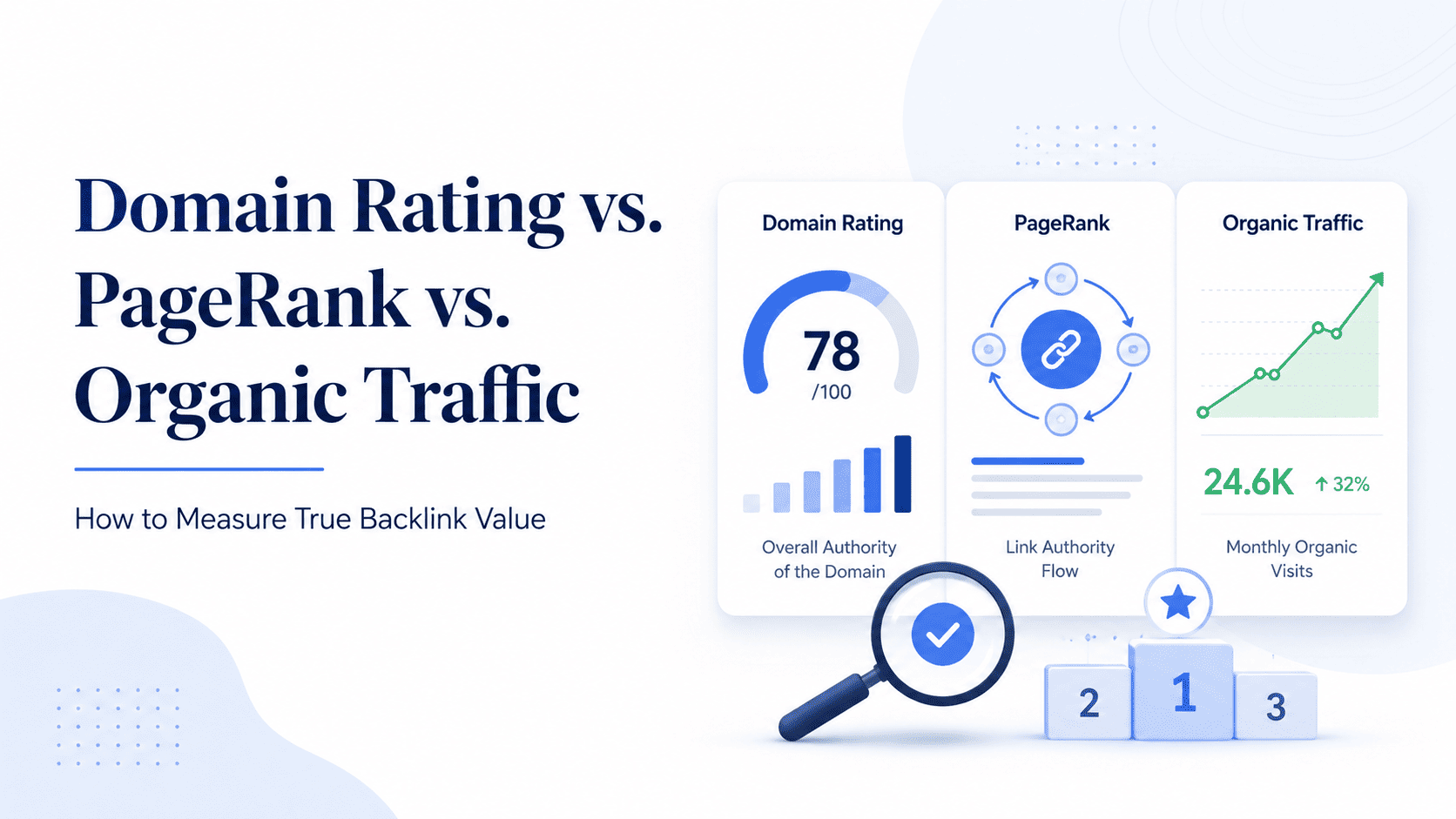
This guide breaks down the technical differences between Domain Rating, PageRank, and Organic Traffic, revealing how to measure true backlink value during your SEO audits.
Comparing the Big 3 Backlink Quality Metrics
To understand true backlink equity, you must differentiate between internal search engine signals and third-party tool estimations:
| Metric Type | Source | True Ranking Influence |
|---|---|---|
| Organic Traffic | Search Engines | CRITICAL (Proves Search Trust) |
| Google PageRank | Google (Internal) | HIGH (Core Link Equity Signal) |
| Domain Rating (DR) | Ahrefs (External) | ESTIMATION (Third-Party Proxy) |
1. Organic Search Traffic (The Gold Standard)
Real organic traffic is the single most reliable quality indicator. If a referring domain receives 1,000+ monthly search visitors from Google, it confirms that:
The site is actively indexed and trusted by search crawlers.
The domain is free from sitewide algorithmic spam penalties.
Content on the domain ranks for real user search queries.
2. Google PageRank & Link Context
While public PageRank toolbar scores were discontinued years ago, PageRank remains an integral part of Google's core ranking systems. Modern PageRank evaluates link equity using the Reasonable Surfer Model:
Links placed contextually inside main body text transfer high equity.
Links buried in footers, author bios, or sidebar widgets carry heavily discounted equity.
Pages with dozens of outbound commercial links dilute equity across all targets.
3. Domain Rating (DR) & Domain Authority (DA)
Third-party metrics measure the relative strength of a website's backlink profile on a scale from 0 to 100. While useful for quick benchmarking, DR is not a Google ranking factor.
Good to know
No single metric can tell you the true value of a backlink. Organic traffic, Google’s internal link signals, and third-party authority scores measure different things and should be interpreted together.
Use organic traffic as evidence that a site attracts search visibility, not as proof that every backlink from it is valuable.
Remember that PageRank remains part of Google’s ranking systems, but its exact modern weighting is not publicly exposed.
Evaluate the specific linking page, not just the strength of the overall domain.
Favor links placed naturally within relevant editorial content over boilerplate or sitewide placements.
Treat DR, DA, and similar scores as comparative estimates rather than Google ranking factors.
Avoid rigid traffic thresholds such as 1,000 monthly visits when evaluating every site.
Combine relevance, page quality, indexing, traffic, link placement, and authority metrics for a more reliable assessment.
Best strategy: page-level relevance + real visibility + contextual placement + multiple supporting metrics.
The Danger of DR Inflation & Manipulated Metrics
One of the biggest risks in modern off-page SEO is purchasing or acquiring links from manipulated DR domains.
| Manipulated "Link Farm" Domain | Legitimate Authoritative Domain |
|---|---|
| DR 65+ (Artificially Boosted) | DR 45+ (Earned Naturally) |
| 0 Organic Search Visitors | 5,000+ Organic Visitors/Month |
| High Moz Spam Score (>15%) | Low Moz Spam Score (<3%) |
| Thousands of Outbound Links | Selective Editorial Link Outlets |
Bad actors can artificially push a domain's DR from 0 to 60+ in weeks by blasting it with automated 301 redirects or low-tier link farms. However, because Google's algorithms neutralize these links, the domain receives zero organic traffic.
Acquiring a backlink from a high-DR site with zero traffic yields virtually no ranking benefit and can even flag your site during a backlink audit.
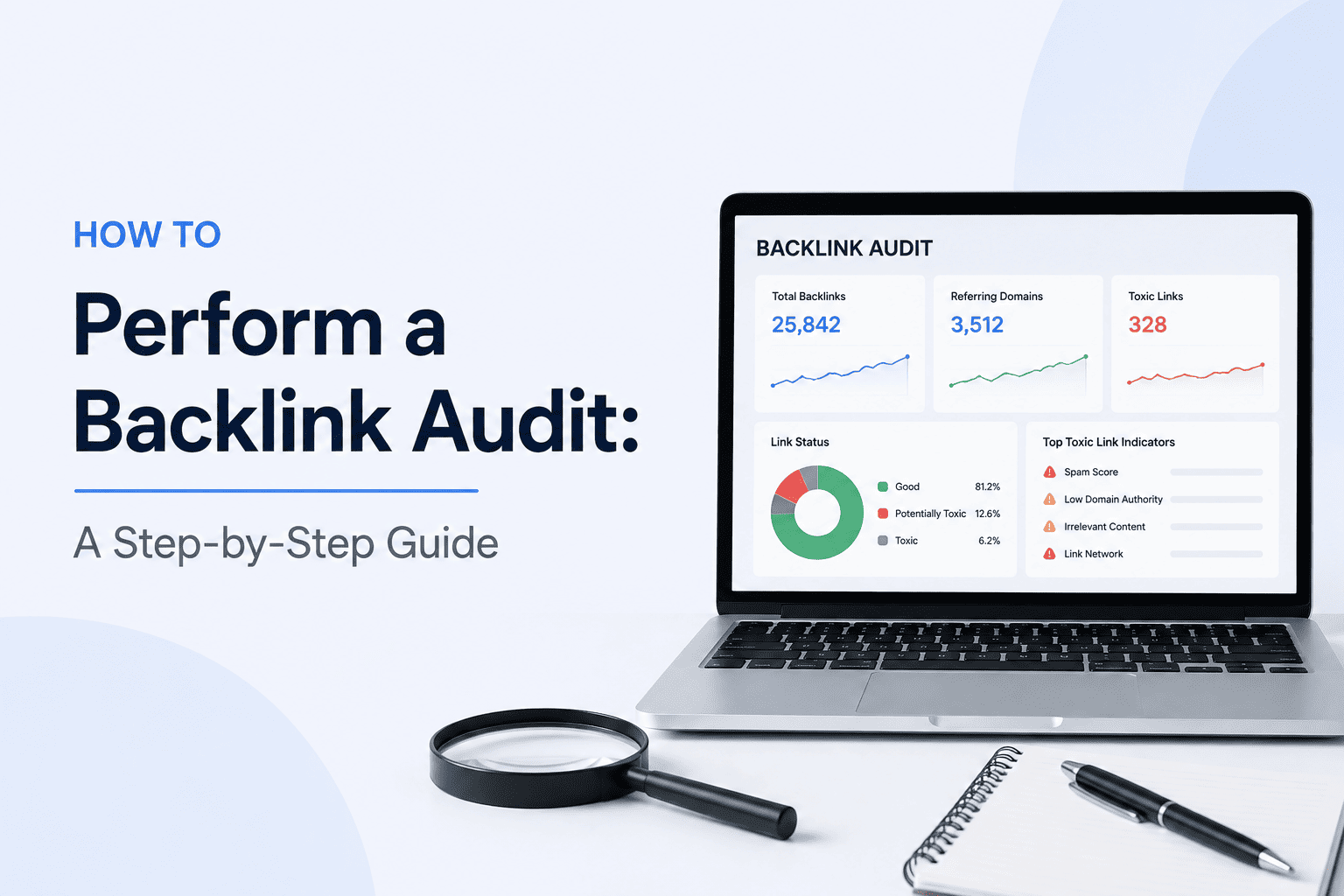
Learn how to audit and remove manipulated domains in our guide:
Good to know
Third-party authority scores can be manipulated, so a high DR or DA should never be evaluated in isolation. The most reliable assessment combines backlink quality, real search visibility, content standards, and outbound-link behavior.
Compare DR or DA with estimated organic traffic and ranking history.
Investigate sudden authority increases that are not matched by stronger content or search visibility.
Review referring domains for suspicious redirect chains, link farms, or obviously manufactured backlinks.
Check whether the site publishes original content and maintains a coherent topical focus.
Examine outbound links for excessive commercial placements or unrelated destinations.
Treat Moz Spam Score and similar metrics as supporting signals rather than definitive evidence.
Evaluate the actual linking page, not just the headline authority score of the domain.
Best strategy: authority metrics + organic visibility + backlink history + editorial quality + page-level review.
The 4-Point Checklist for Evaluating Backlink Quality
Before acquiring a backlink or approving a link trade, pass the domain through this 4-point verification checklist:
Traffic Threshold: Does the domain receive at least 1,000 monthly search visitors verified via Ahrefs or Semrush?
Topical Alignment: Is the referring domain contextually related to your broader industry?
Spam Score Safety: Is the domain's Moz Spam Score strictly under 5%?
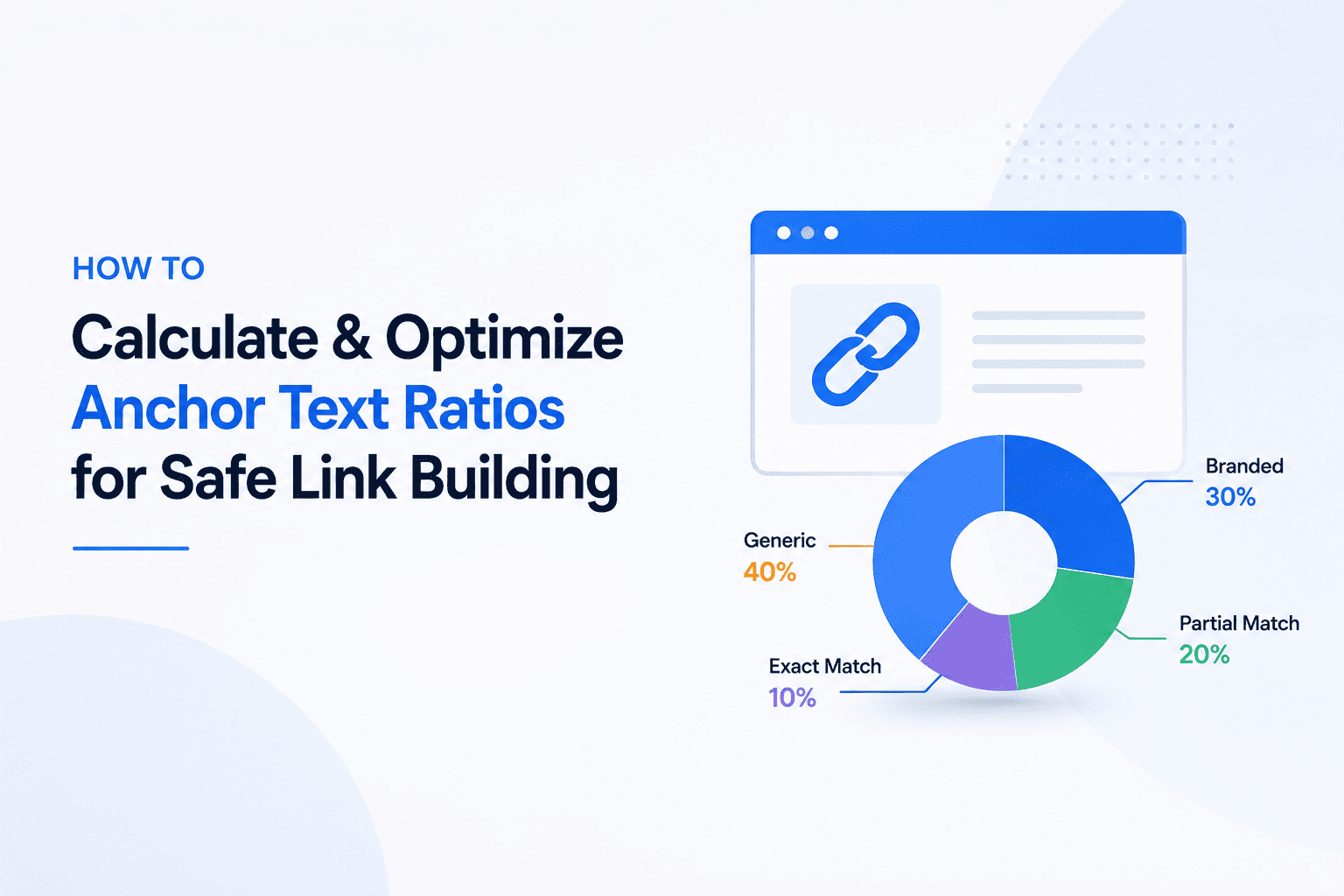
Anchor Diversity: Does your target landing page maintain a balanced anchor profile with exact-match keywords strictly under 10%?
To review anchor calculation formulas and dilution strategies, read our cluster article on:
Good to know
A backlink quality checklist is useful for consistency, but no single traffic, spam-score, or anchor-text threshold can guarantee that a link is safe or valuable. Strong evaluation combines several signals and includes manual review.
Use organic traffic estimates as a quality indicator, not a mandatory minimum.
Prioritize topical relevance between the referring site, linking page, and destination page.
Treat Moz Spam Score and similar third-party metrics as warning signals rather than definitive judgments.
Review anchor text for unnatural repetition instead of enforcing one fixed percentage.
Check whether the linking page is indexed, maintained, and editorially credible.
Examine the site’s outbound-link behavior for excessive or unrelated commercial placements.
Make the final decision based on the combined quality picture rather than a single metric.
Best strategy: multi-signal screening + topical relevance + natural anchors + manual quality review.
Rebuilding Authority with Traffic-Verified Links
Once you filter out low-value vanity domains, focus your off-page strategy on acquiring high-equity, non-reciprocal backlinks:
Non-Reciprocal 3-Way Exchanges: Protect your domain from reciprocal footprint detection while trading links with traffic-verified partners (A → B → C → A). Read our core pillar guide: ABC Link Building: The Ultimate Guide to 3-Way Backlink Exchanges.
B2B & SaaS Strategies: Build bottom-of-funnel domain authority through product integration hubs and comparison pages. Review our full playbook: SaaS Link Building Strategy: How to Scale High-Authority Backlinks.
Toxic Link Disavow Protocols: Clean out old, zero-traffic spam links safely using our step-by-step guide: How to Identify & Disavow Toxic Backlinks Without Hurting Your SEO.
Platforms like BacklinkExchange.org simplify backlink acquisition by automatically matching your site with traffic-verified, niche-relevant partners for secure, non-reciprocal 3-way trades.