



Acquiring high-authority backlinks is essential for driving organic rankings, but building links without monitoring your backlink profile is a major SEO risk. Unmonitored link profiles can accumulate toxic links, spam network citations, and over-optimized anchor text—all of which can trigger search engine penalties and suppress organic traffic.
Conducting regular backlink audits allows site owners, SaaS teams, and agencies to clean up toxic link equity, safeguard domain health, and discover high-impact link opportunities.
This pillar guide covers everything you need to audit your backlink profile, manage toxic links, recover from ranking drops, and turn off-page data into a predictable competitive advantage.
What is a Backlink Audit and Why is it Critical?
A backlink audit is an evaluation of every external hyperlink pointing to your web property. The goal is to analyze the health, authority, and safety of your link profile while ensuring your backlink footprint appears natural to search algorithms.
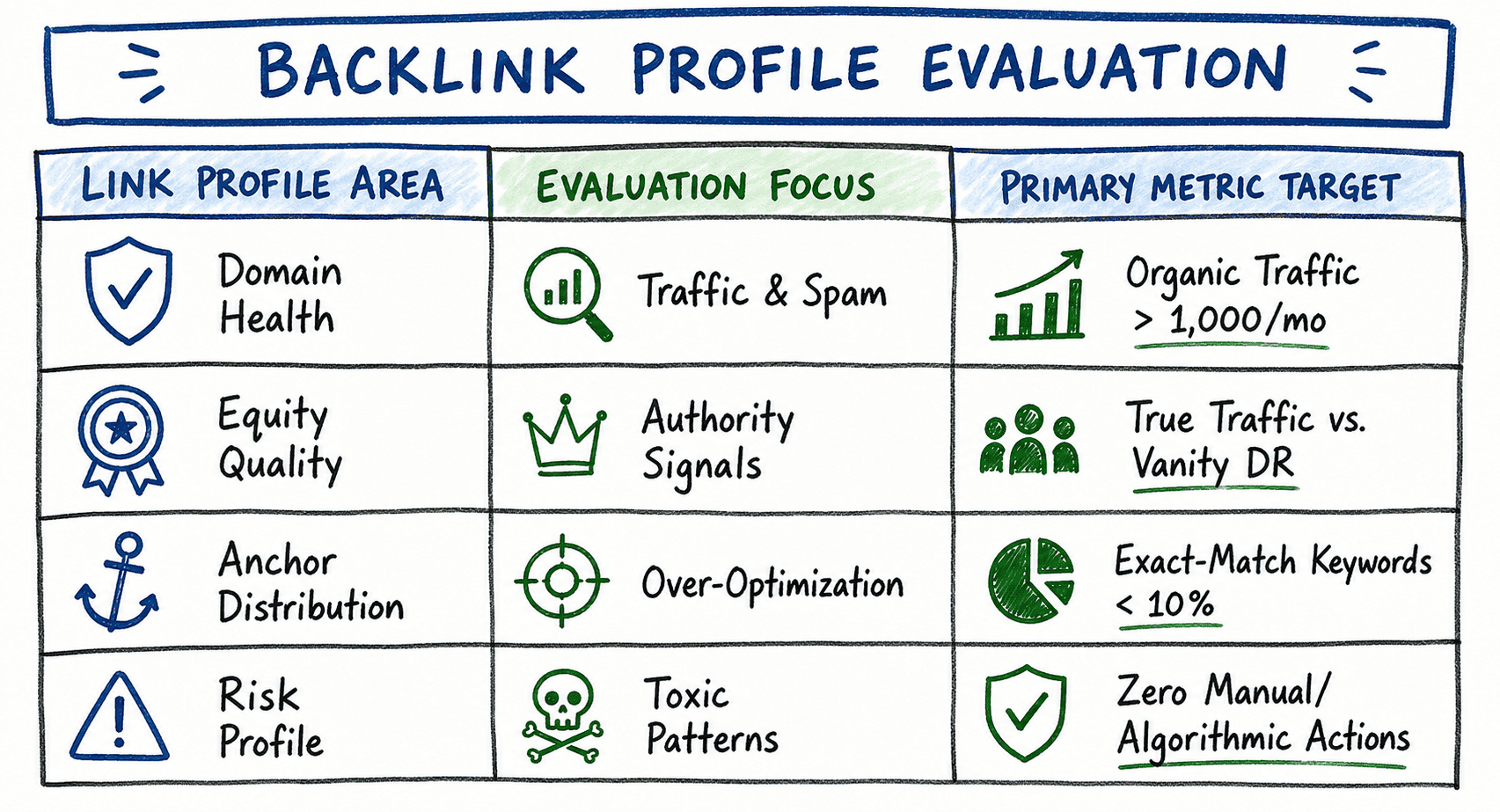
Without regular audits, three primary off-page risks emerge:
Algorithmic Ranking Penalties: Google’s core spam algorithms silently neutralize or suppress pages with unnatural backlink velocity or exact-match anchor manipulation.
Negative SEO Vulnerability: Malicious competitors can blast your domain with low-quality, automated spam links to trigger manual review filters.
Wasted Link Equity: Continuing to acquire new links while your core domain is weighed down by toxic backlinks limits your return on link-building investments.
Good to know
A backlink audit should focus on patterns, relevance, and signs of deliberate manipulation—not simply on collecting a list of low-authority domains. Google’s systems can ignore many spammy links automatically, while links created primarily to manipulate rankings remain the greater concern.
- Review referring domains, linking pages, anchor text, and link growth together rather than relying on a single toxicity score.
- Look for unnatural patterns such as excessive exact-match anchors, automated placements, or large-scale link exchanges.
- Separate genuinely manipulative links from harmless low-quality or scraper-generated backlinks.
- Investigate sudden backlink spikes, but do not assume every spike represents negative SEO.
- Use third-party authority and spam metrics as diagnostic signals, not as Google-defined penalties.
- Prioritize links you intentionally built or acquired through questionable practices when considering cleanup.
- Track backlink changes over time so unusual patterns are easier to identify early.
Best strategy: pattern analysis + contextual review + cautious cleanup + long-term backlink monitoring.
Core Pillars of Backlink Profile Management
A complete backlink management framework consists of four tactical areas. Each area serves as a dedicated focus for keeping your off-page profile healthy and competitive:
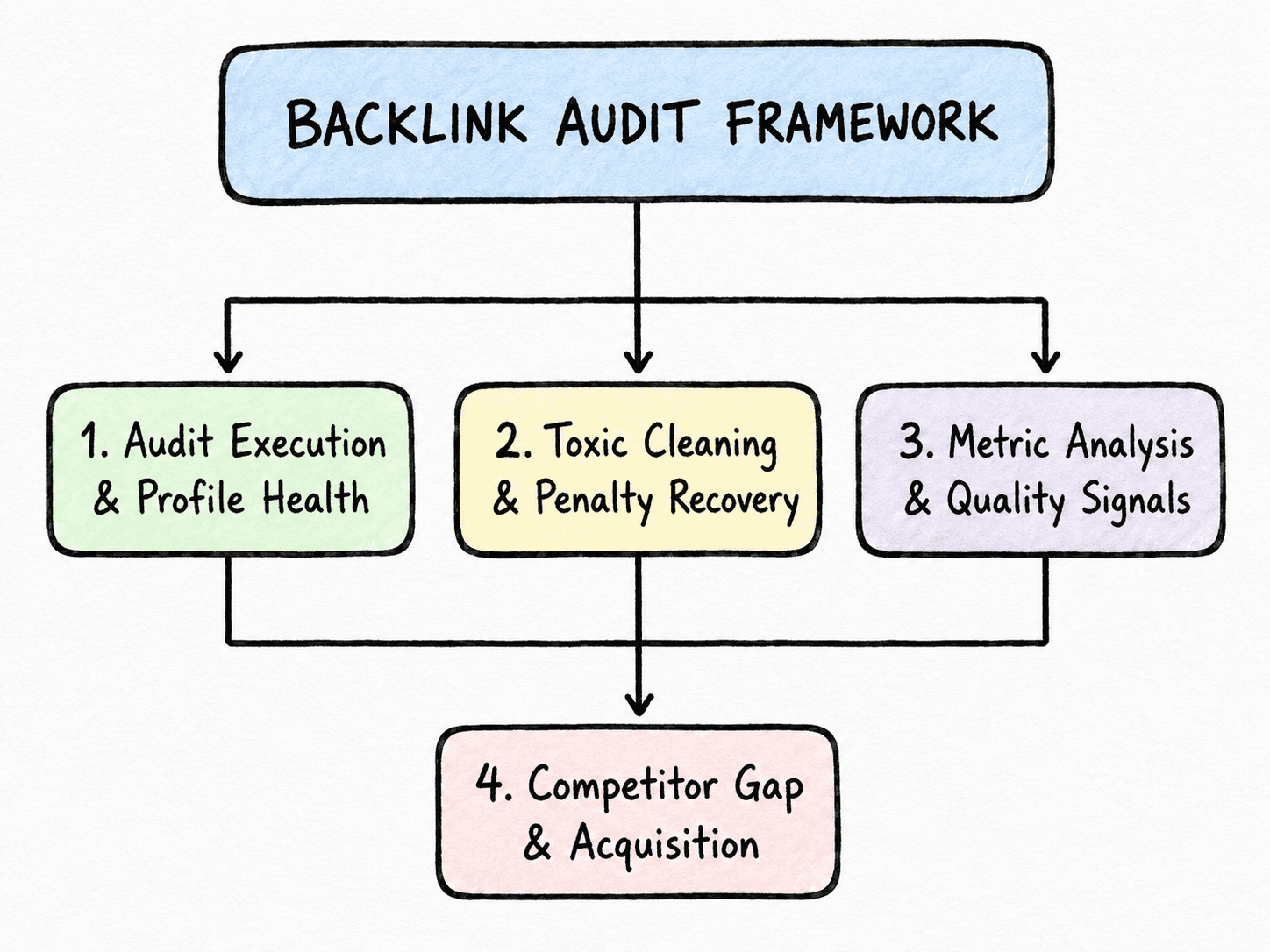
Backlink audit framework diagram showing the four key stages of off-page SEO analysis: profile health auditing, toxic link cleaning, quality metric analysis, and competitor backlink gap acquisition.
1. Step-by-Step Backlink Auditing
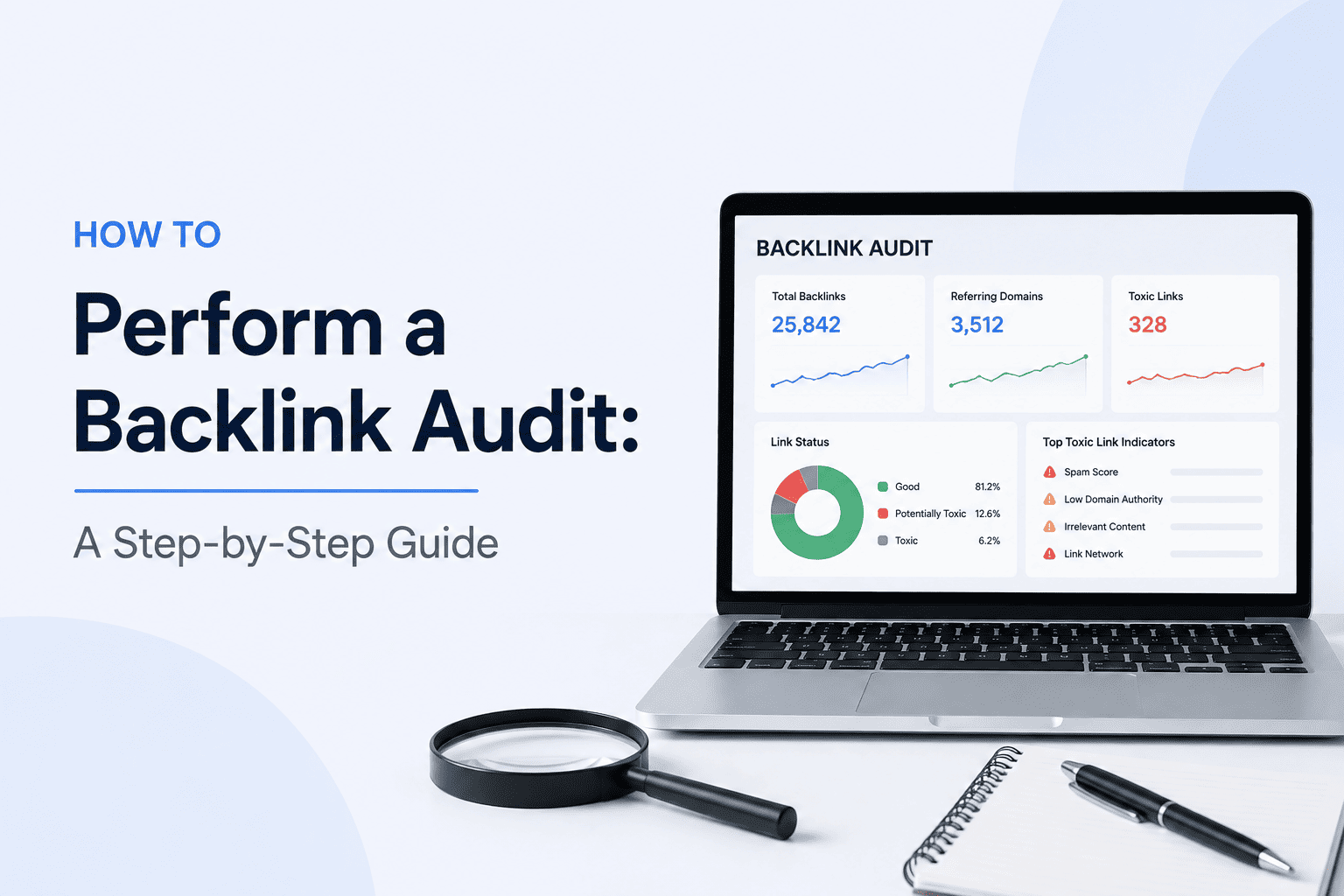
Conducting an audit requires exporting backlinks from multiple data sources (Google Search Console, Ahrefs, Semrush, Moz), deduplicating the list by unique referring domains, and grouping links by risk profile.
To execute a complete audit step-by-step, follow our detailed guide on How to Perform a Backlink Audit (Step-by-Step Guide for 2026):
2. Toxic Link Identification & Disavow Execution
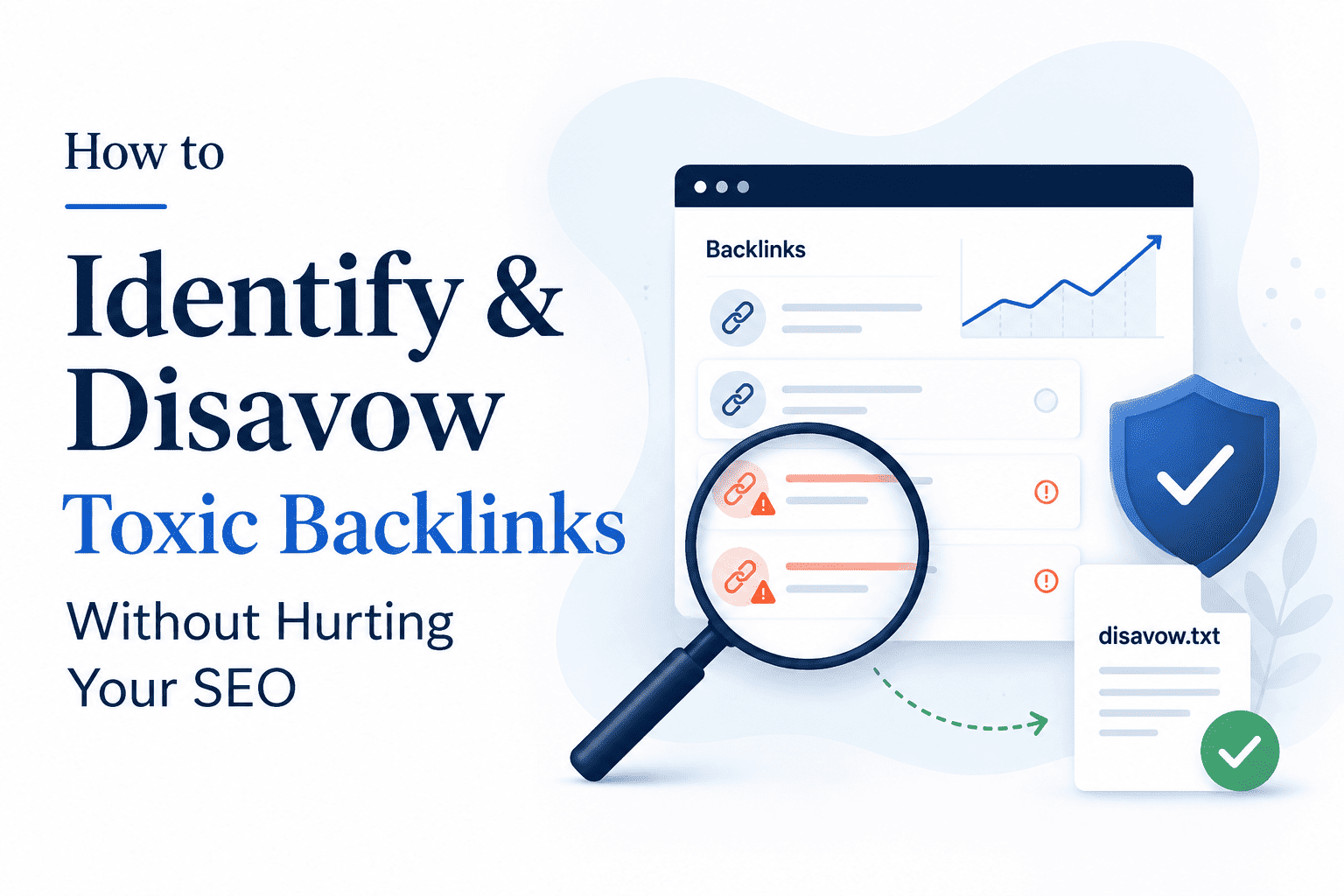
Not every low-quality link requires disavowing. Search engines automatically ignore most low-tier web spam. However, when aggressive spam networks threaten your rankings, identifying toxic links and submitting a clean Google disavow file is critical.
Learn the exact parameters for isolating toxic links in our guide to How to Identify & Disavow Toxic Backlinks Without Hurting Your SEO:
3. Measuring True Link Equity Beyond Vanity Metrics
Third-party metrics like Domain Rating (DR) or Domain Authority (DA) are useful benchmarks, but they can be easily manipulated. Evaluating true link value requires looking at real organic search traffic, indexing consistency, and topical relevance.
For a full breakdown comparing third-party scores against real ranking signals, read Domain Rating vs. PageRank vs. Organic Traffic: How to Measure True Backlink Value (Article 3 - Coming Soon).
4. Google Penalty Recovery & Diagnostic Workflows
If your site suffers a sudden organic traffic drop following an algorithm update, diagnosing whether the cause is algorithmic rank suppression or a manual action is your first step toward recovery.
Follow our step-by-step diagnostic workflow in How to Recover From a Google Link Penalty (Algorithmic vs. Manual Actions) (Article 4 - Coming Soon).
5. Rebuilding Equity via Competitor Backlink Gap Analysis
Cleaning up your backlink profile creates a healthy foundation, but regaining lost rankings requires acquiring high-quality backlinks. The fastest way to find proven link opportunities is by auditing where your top competitors get their links.
Discover how to locate and replicate high-value competitor backlinks with our playbook on Competitor Backlink Analysis: How to Steal Your Competitors' Best Links (Article 5 - Coming Soon).
Good to know
Backlink profile management is not just about removing bad links. A strong framework combines regular auditing, cautious cleanup, realistic link valuation, penalty diagnosis, and new-link acquisition to keep off-page performance stable over time.
- Audit backlink data from multiple sources to build the most complete possible picture.
- Review patterns at the domain and page level instead of relying on a single toxicity score.
- Use disavow tools cautiously and only after identifying links that appear genuinely manipulative or harmful.
- Treat authority metrics as reference points, not as substitutes for relevance, indexing, and real search visibility.
- Investigate ranking drops systematically before assuming a link-related penalty.
- Compare your backlink profile with top competitors to uncover practical acquisition opportunities.
- Pair cleanup efforts with new, higher-quality link acquisition so authority is rebuilt over time.
Best strategy: regular audits + careful risk review + selective cleanup + realistic valuation + competitor-informed link growth.
Balancing Anchor Text & Off-Page Safety
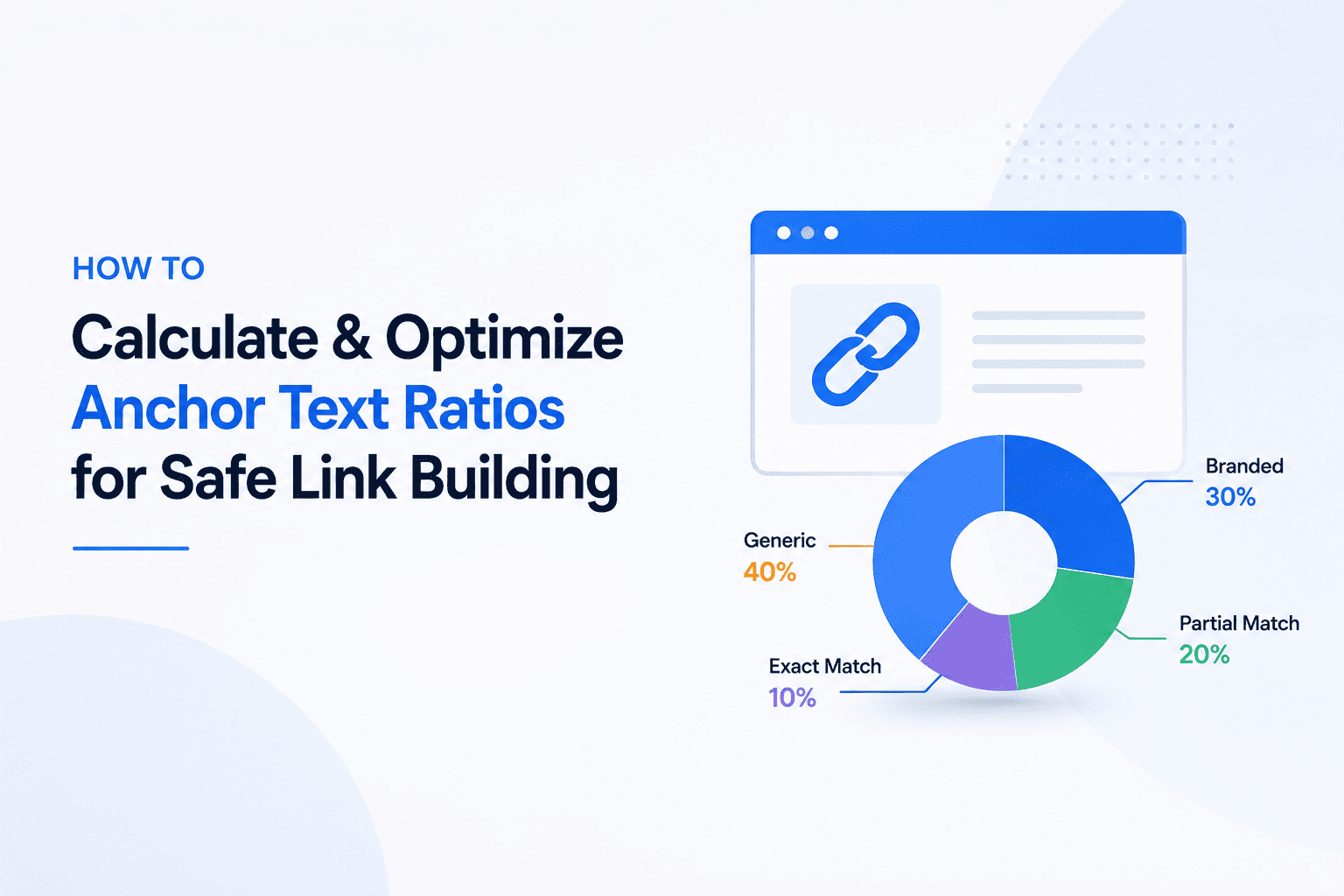
A critical component of any backlink audit is evaluating anchor text distribution. Even authoritative links can trigger over-optimization filters if your exact-match commercial keyword percentage is too high.
A safe, natural backlink profile maintains a brand-heavy anchor distribution:
Branded & URL Anchors: ~70%
Partial-Match & Descriptive Anchors: ~20%
Exact-Match Commercial Keywords: Strictly < 10%
For detailed anchor text audit formulas and profile rebalancing strategies, read our cluster guide on How to Calculate & Optimize Anchor Text Ratios for Safe Link Building:
Good to know
Anchor text is an important backlink-quality signal, but there is no universal “safe” percentage for branded, partial-match, or exact-match links. Natural profiles vary by industry, brand strength, page type, and how links are earned.
- Review anchor text as a pattern rather than against one fixed formula.
- Expect branded, URL, and descriptive anchors to make up a substantial share of naturally earned links.
- Watch for repeated exact-match commercial anchors pointing to the same landing pages.
- Compare anchor distribution across both the domain and individual high-value pages.
- Investigate sudden shifts caused by coordinated campaigns or large batches of similar links.
- Avoid forcing anchor text solely to meet a predetermined percentage target.
- Use competitor data as context, not as a template to copy mechanically.
Best strategy: natural anchor variation + brand-heavy patterns + limited exact-match repetition + page-level monitoring.
Safe Link Acquisition: Rebuilding After an Audit
Once toxic links are identified and cleaned, focus on rebuilding domain authority using safe, non-reciprocal link acquisition strategies.
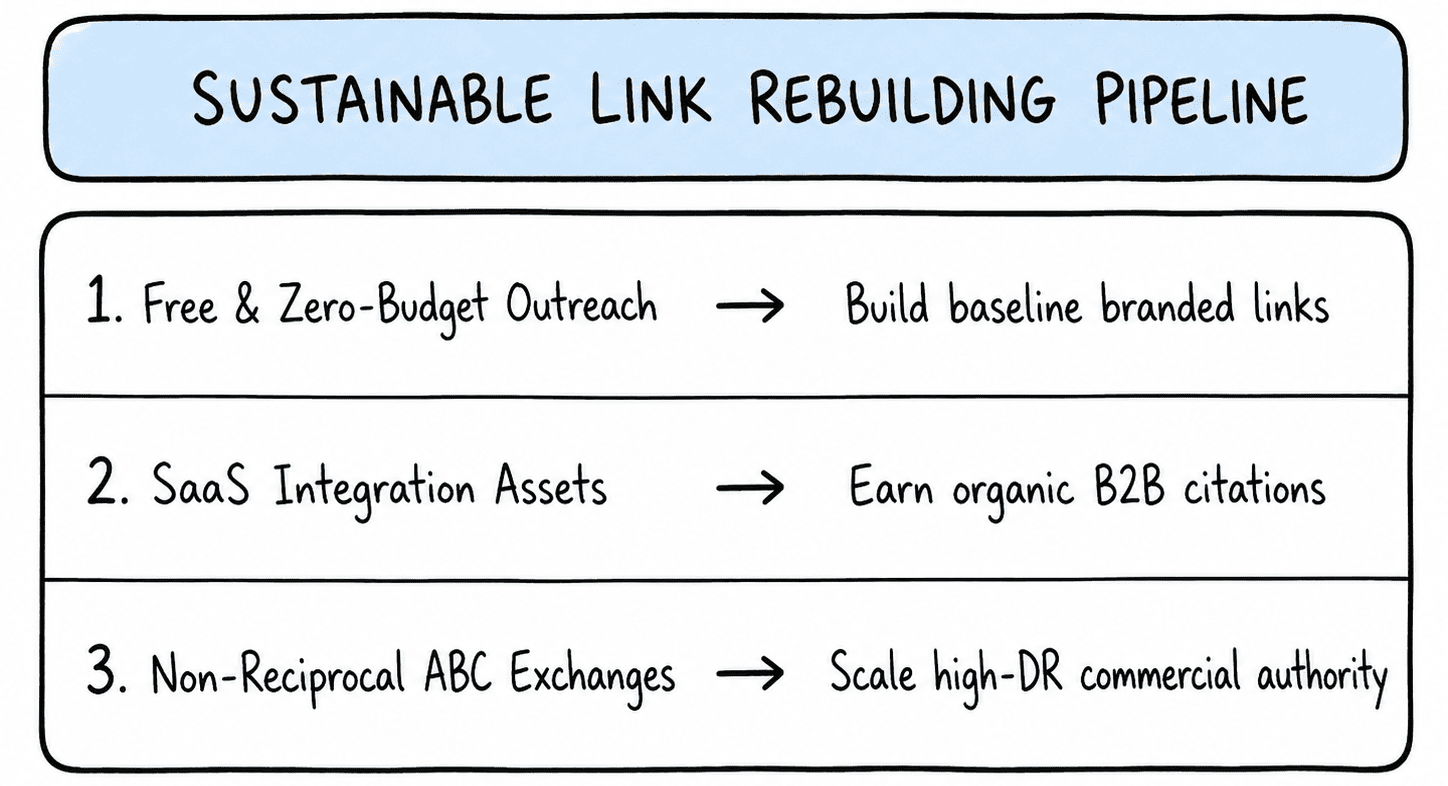
Zero-Budget Link Building: Learn how to earn high-authority backlinks without paid placements in our guide on Free Backlinks: The Complete Guide to Building Links Without Spending Money:
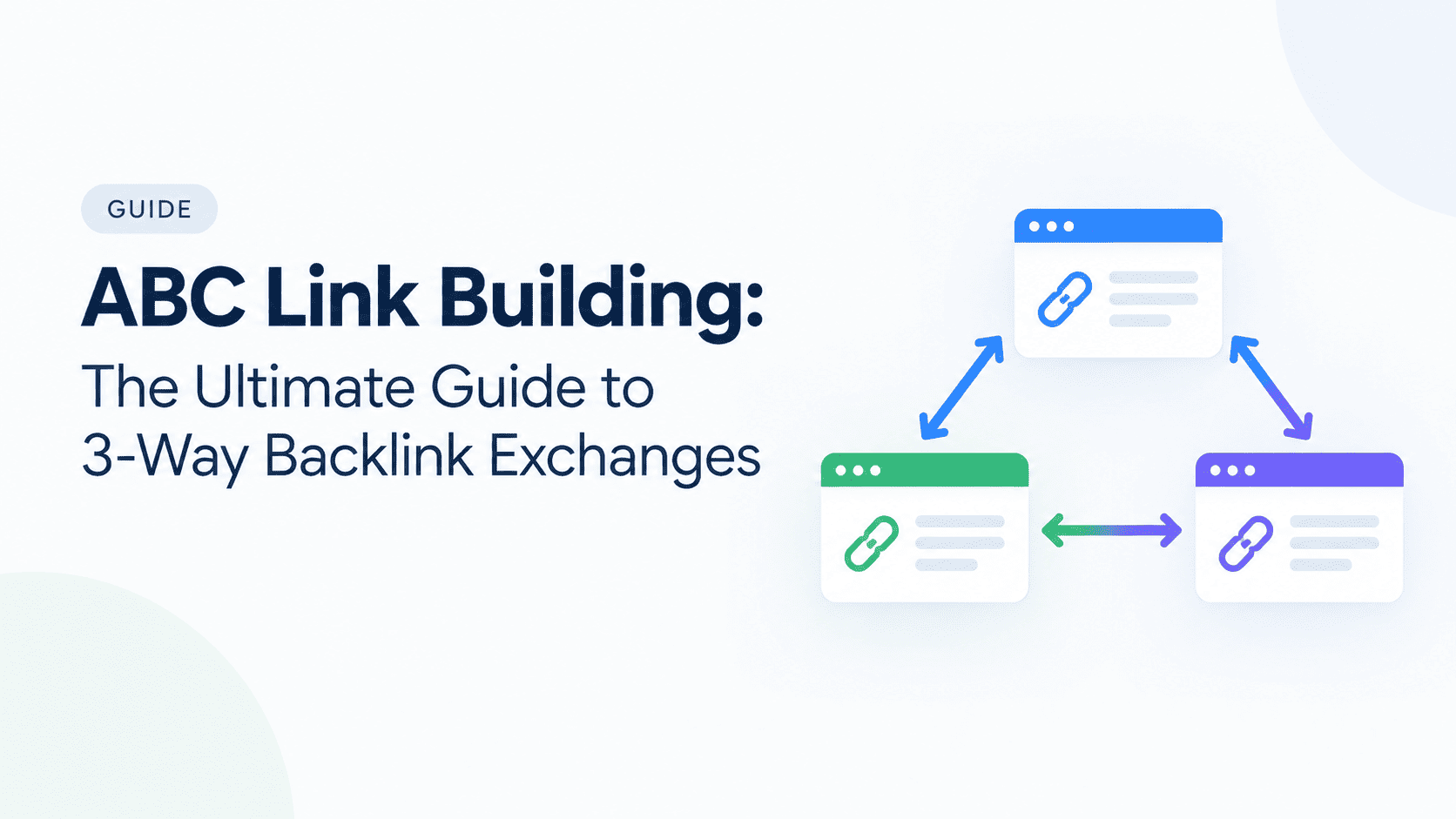
Non-Reciprocal ABC Exchanges: Protect your domain from reciprocal footprint detection by routing backlink trades through triangular exchange networks (A → B → C → A). Read our core pillar guide on ABC Link Building: The Ultimate Guide to 3-Way Backlink Exchanges:
SaaS Growth Strategies: For software platforms looking to scale bottom-of-funnel rankings safely, review our SaaS Link Building Strategy: How to Scale High-Authority Backlinks:
Automated platforms like BacklinkExchange.org simplify backlink management by connecting you with verified, niche-relevant partners for non-reciprocal ABC link trades—helping you build scalable domain authority without manual outreach overhead.
Good to know
Backlink rebuilding should focus on replacing weak or manipulative patterns with links that have clear editorial value. No acquisition method is automatically “safe” simply because it avoids direct reciprocity.
- Prioritize links from relevant sites with real audiences and useful content.
- Use outreach, partnerships, integrations, and linkable assets to diversify acquisition sources.
- Treat ABC exchanges as coordinated link arrangements, not inherently risk-free one-way links.
- Avoid scaling any tactic solely to increase authority metrics or backlink counts.
- Review anchor text, placement context, and referring-domain quality as new links are acquired.
- Keep commercial landing pages supported by broader informational and editorial assets.
- Monitor new backlink growth so another unnatural pattern does not replace the one you just cleaned up.
Best strategy: diverse acquisition channels + genuine editorial value + natural anchors + ongoing backlink monitoring.