What Are Backlinks and Why Do They Matter for SEO?
Backlinks are one of the oldest and most enduring ranking signals in SEO — but understanding what actually makes a backlink valuable (and what doesn't) is essential before building any link strategy. This guide breaks down the fundamentals in plain terms.
A backlink is a link from one website to another, and search engines treat backlinks as a signal of trust, relevance, and authority. Not all backlinks carry equal weight — factors like the linking site's authority, topical relevance, and whether the link is dofollow or nofollow all influence how muc
✓
Key takeaways
Backlinks act as a trust signal — search engines interpret them as other sites vouching for your content.
Not all backlinks are equal — relevance and linking-site authority matter more than raw link count.
Dofollow links pass authority ("link equity"); nofollow links generally don't, though both can still drive traffic.
Backlinks are one of many ranking factors, not the only one — content quality and relevance still matter enormously.
A natural, diverse link profile is safer and more effective than a large volume of similar or manipulative links.
How To
Step-by-step process
1
Create a Free Account
Sign up on backlinkexchange.org with your website URL and basic site details. No cost, no credit card required to get started.
2
Add Your Website to the Directory
Submit your site's niche, category, and relevant metrics so the platform can match you with topically relevant exchange partners — relevance is what keeps exchanges safe and effective.
3
Browse or Get Matched With Partner Sites
Use the platform's directory or matching system to find websites in your niche or a closely related category that are also looking to exchange links.
4
Review Partner Site Quality
Before agreeing to an exchange, check the partner site's relevance, content quality, and outbound link ratio — the platform surfaces this so you're not exchanging blind.
5
Propose or Accept a Link Exchange
Send an exchange request specifying where the link will be placed (e.g., a relevant blog post or resource page), or accept an incoming request that fits your site.
6
Add the Agreed Link to Your Site
Place the partner's link naturally within relevant content — never on an irrelevant page, and never in bulk — to keep the exchange looking and functioning organically.
7
Confirm the Reciprocal Link Is Live
Verify your partner has placed your link as agreed, ideally dofollow if that was the arrangement, using the platform's built-in tracking or a backlink checker tool.
8
Track Your Growing Link Profile
Monitor your new backlinks, domain authority movement, and exchange history from your backlinkexchange.org dashboard to keep building consistently over time.
Manipulative schemes violate guidelines; legitimate linking does not-Source
What Is a Backlink?
A backlink, also called an inbound link or incoming link, is simply a hyperlink on one website that points to a page on another website. If Site A links to Site B, Site B has earned a backlink from Site A. This is the basic building block behind one of the internet's oldest ranking concepts.
Why Search Engines Care About Backlinks
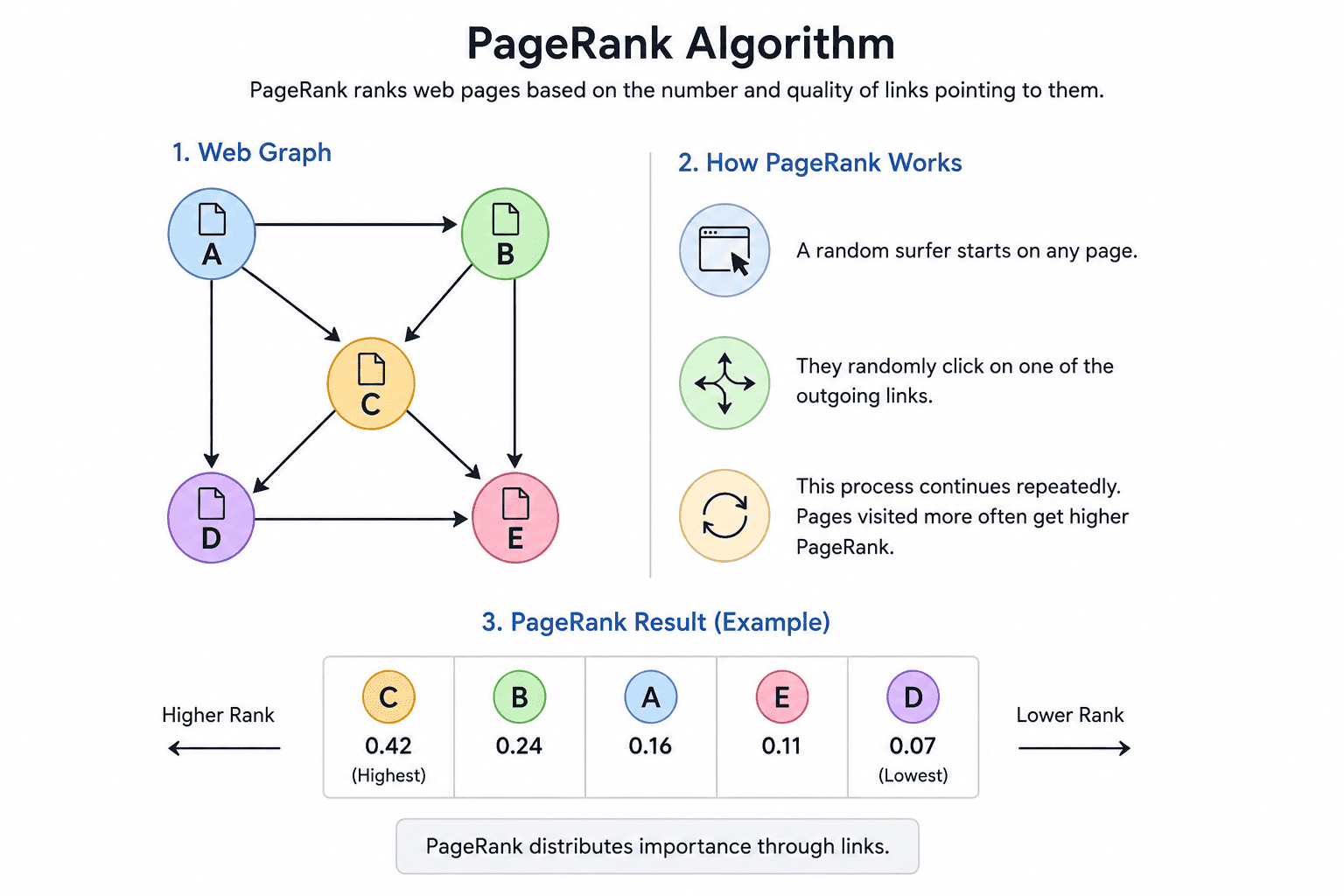
Search engines need a way to judge which pages are trustworthy and authoritative on a given topic, beyond just what the page itself claims. Backlinks act as a kind of independent endorsement — when a reputable site links to your content, it signals to search engines that your page is worth referencing. This concept traces back to Google's original PageRank algorithm, which used the link structure of the web itself as a core trust signal.
That said, backlinks are just one of many ranking factors today. Content quality, relevance, user experience, and topical authority all play a role — backlinks amplify good content, but they don't replace the need for it.
(For the practical side of building these signals, see our pillar guide: "Free Backlinks: The Complete Guide to Building Links Without Spending Money.")
Not All Backlinks Are Equal
A single backlink from a highly relevant, authoritative site in your niche typically carries more SEO value than dozens of links from unrelated, low-quality sites. Several factors determine a backlink's value:
Relevance — is the linking site topically related to yours?
Authority — does the linking site have strong trust and authority signals of its own?
Placement — is the link placed naturally within relevant content, or stuffed into an unrelated page?
Link attribute — is it dofollow (passes authority) or nofollow (doesn't)?
Dofollow vs. Nofollow Backlinks
By default, links are "dofollow," meaning they pass link equity — a portion of the linking page's authority — to the page they point to. In 2005, Google introduced the "nofollow" attribute, originally to combat comment spam, allowing site owners to link to content without passing that authority signal. In 2019, Google added two more specific attributes — "sponsored" for paid links and "ugc" for user-generated content — to give more granular context about link types.
Nofollow links don't directly boost rankings the way dofollow links can, but they still offer real value: referral traffic, brand visibility, and a more natural-looking link profile (a site with 100% dofollow links can actually look suspicious to search engines).
Are Backlinks Still Important in 2026?
Yes. While the SEO landscape has evolved significantly — with more emphasis on content quality, user experience, and increasingly, AI-driven search features — backlinks remain a core trust and authority signal. Google's own guidelines continue to address link spam and manipulative linking specifically, which wouldn't be necessary if links no longer mattered to rankings.
(For a breakdown of how free link-building fits into a safe, modern strategy, see: "Is Free Backlink Exchange Safe for SEO in 2026?")
Frequently Asked Questions
What's the difference between a backlink and an internal link?
A backlink comes from a different website (external), while an internal link connects pages within the same website. Both matter for SEO, but they serve different purposes.
How many backlinks does a page need to rank well?
There's no fixed number — it depends on the competitiveness of the topic and the quality/relevance of the links a page already has.
Do all backlinks help my SEO?
No. Low-quality, irrelevant, or spammy backlinks can be neutral or even harmful, particularly if they appear manipulative or come from penalized sites.
What is anchor text and why does it matter?
Anchor text is the clickable text of a hyperlink. Search engines use it as a relevance signal, so varied, natural anchor text tends to perform better than repetitive exact-match phrasing.
Can I remove a bad backlink pointing to my site?
You can't directly remove a link from someone else's site, but you can request removal from the site owner or use Google's disavow tool for links you believe are harmful.
Is a nofollow link worth pursuing?
Yes — while it doesn't pass direct link equity, it can still drive referral traffic, build brand visibility, and contribute to a natural-looking link profile.
How do search engines discover new backlinks?
Search engine crawlers find new backlinks by crawling the web and indexing pages, including any links on those pages — this happens continuously as sites are recrawled.
Do backlinks matter for AI-driven search (like AI Overviews)?
Backlink authority still contributes to a site's overall trust signals, which can influence whether AI-driven search features reference or cite your content, alongside content structure and clarity.
What's a "natural" backlink profile?
A natural profile shows a mix of link types (dofollow/nofollow), varied anchor text, and links accumulated gradually over time from a range of relevant sources — rather than a large batch of similar links appearing all at once.
Authoritative sources
Primary references and supporting research used for this article.